Oct 02, 2026 • Jackson Njoroge
Digital Asset Management: How QR Codes Can Improve Business Asset Tracking
Businesses can own hundreds or thousands of physical assets, including laptops, phones, monitors, printers, vehicles and other equipment.
As the number of assets grows, managing them through spreadsheets or paper records becomes increasingly difficult.
A digital asset register combined with QR code tracking provides a more organized approach.
What is an asset register?
An asset register is a centralized record of an organization's physical assets.
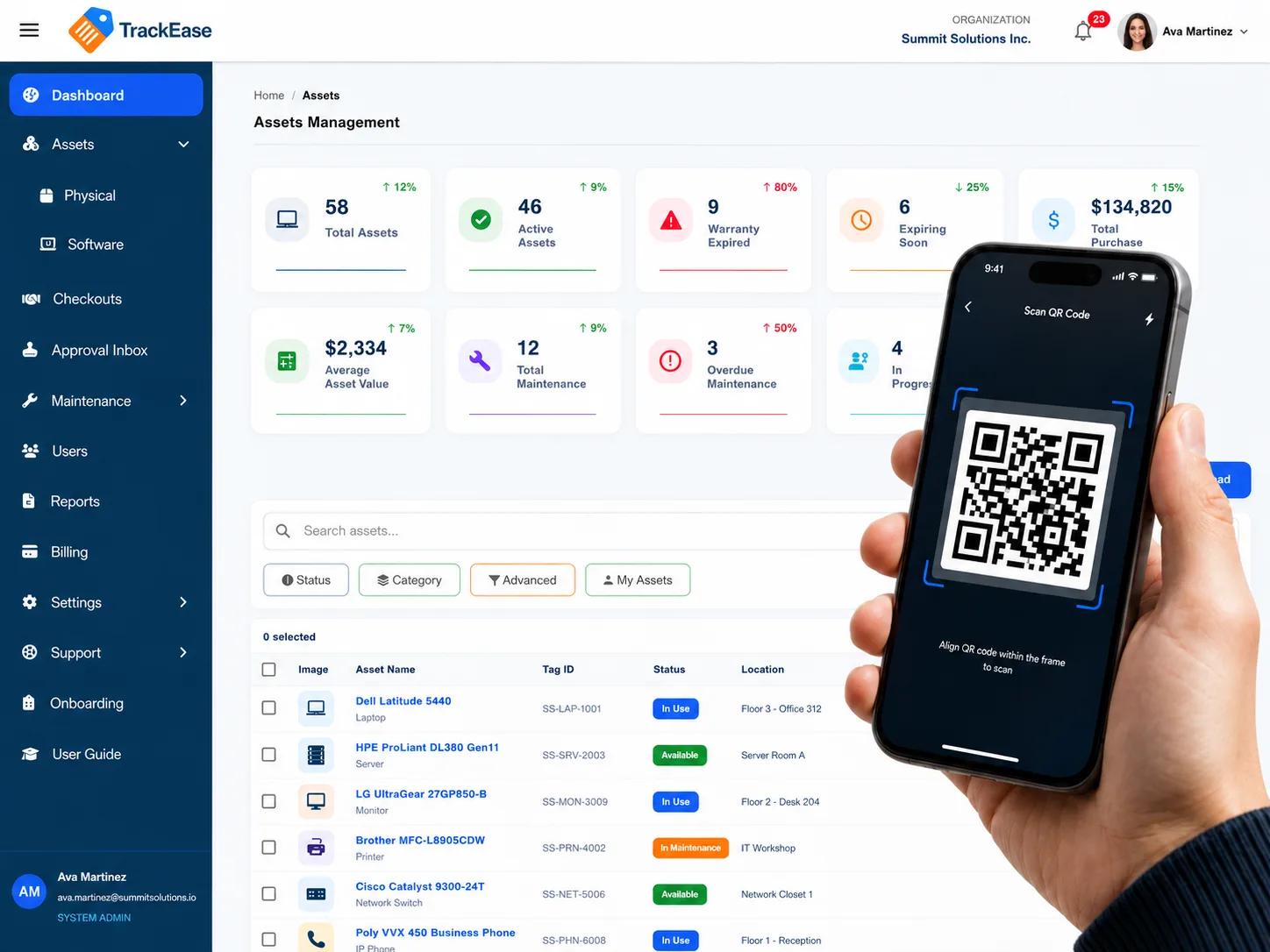
A record can include asset number, name and category, serial number, purchase information, current status, assigned employee, location, condition, repair history and retirement information.
Instead of maintaining multiple spreadsheets, authorized users can manage this information through one system.
Why use QR codes?
A QR code creates a physical connection between an asset and its digital record.
A company can attach a QR code to a laptop, printer or other equipment. Scanning the code can quickly identify the asset and display its relevant information.
Track the complete asset lifecycle
A useful system can track statuses such as Available, Assigned, Repair, Lost, Retired or Disposed.
The system can also maintain a history of assignments, repairs and other important events.
Easier audits
During an asset audit, administrators can scan equipment and compare physical assets with digital records. This makes it easier to identify missing, misplaced or unexpected equipment.
Role-based access
Asset information should also be protected.
An employee may only need to view equipment assigned to them, while administrators may need permission to create, assign, repair and retire assets.
Reporting
Once asset information is centralized, management can see total assets, available assets, assigned assets, assets under repair, lost assets and retired assets.
Asset management is ultimately about accountability. From acquisition to assignment, maintenance and retirement, a digital system provides a clear history of what happened to each asset.
At Alphaja, we build asset management platforms with QR identification, assignments, status tracking, search and reporting to help organizations manage their physical assets more effectively.




Be the first to comment.